Showing posts with label education. Show all posts

Tuesday, 18 June 2013

When marriage for a girl is more important than education

A news item in the Times of India:

Father kills daughter for refusing to marry

Some portions from the news item -

KANPUR: A man allegedly killed his 15-year-old girl for refusing to marry a boy of his choice at Virma in Uttar Pradesh's KanpurDehat on Tuesday evening. 

Police said the girl had apparently turned down the proposal saying she was young and wanted to study.

The girl was an intermediate student and had been staying with her maternal uncle in Gudha village to complete her studies. She had returned home for summer vacations.

A police officer said ever since she had returned home, Shukla had been pestering her to accept the marriage proposal.

So what does this say about the society -
  • You should not have an opinion of your own girl. You dare not go against parental wishes. Father knows best. 
  • He can even kill you for opposing him. 
  • Marriage is more important than education.
  • What use is education? Your role in society is to cook, look after your husband and his family,  and bear children.
This is the mindset that has to change. Until then....


Sunday, 18 October 2009

An inspiring story - The youngest headmaster in the world

The story about Babar Ali, born to poor illiterate parents in West Bengal, is really heartening. See the what this 16-year-old has done. How he is using all that he has to change the lives of children who may never be able to go to school.


The story will make you happy and also bring tears to your eyes. It holds a lesson for all of us. Are we doing enough to change the condition of those less fortunate than us?

Thank god, we have people like Babar Ali in the world.

Sunday, 15 March 2009

Four women in search of a future

Creativity killed, Talent murdered, Growth stunted
By Shree Venkatram

This is the story of four brilliant students: Shivani, Tara, Tanvi and Anita, who passed out of school in 2004. Their names have been changed, for their story is being told without their permission. They are all at the exciting age of 21 years, getting ready to claim the world. Unfortunately, something has gone terribly wrong.

Shivani was the head girl of her school. Bright, extremely creative, she scored well in her school exams and got into a leading college, counted among the top ten in India. She became an active member of the college’s dramatic society, then its secretary and in the final year was its President. She wrote, produced and directed plays, winning acclaim at inter -college festivals. She received an invitation to perform one of her plays in Pakistan.

She spent a summer vacation equipping young people in the slums of Delhi to bring out wall newspapers. She worked with them on their writing skills and taught them how to draw and paint. She spent another holiday brightening up the lives of little children in a slum. Every day for two months, in the gruelling heat of Delhi summer, she jumped over the garbage heaps and drains to put the children, a few years younger than herself, through rehearsals to produce a lively play, that gave the parents and the community an evening of colour, joy and laughter.

She was keen to build on her creative talent, and applied for a post-graduate degree course in mass communications specialising in film making at a university in Delhi. Her name did not figure even on the list of those called for a first-round interview. India had said “No” to a person of her calibre. She is now preparing for CAT (Common Admission Test) conducted by the Indian Institutes of Management. She might get in, chances are she might not, for her aptitude lies elsewhere. But one thing is definite: A budding film maker has been stymied, throttled.

Tara went to one of India’s best schools and made it to a leading college. Her results have been brilliant. She writes lyrics, composes music and plays in an all-girl band. Highly motivated and creative, she brought out a campus newspaper, conceptualising it, putting it together, seeking ads and then selling it, along with a bunch of students.

She too had sought admission to the same course in mass communications. She too failed to make it. I do not have her reaction, but the people who know her are dumbfounded. Why are such brilliant students failing to secure seats to institutes of higher learning? Have reservations taken over to such an extent that promising students are being turned away?

Tanvi had set her heart on medicine. A conscientious student, she had scored well in school. So keen was she on pursuing medicine that she took a year off to prepare for the Pre-Medical entrance examination. While other girls her age caught the latest films, hung around with friends, and took vacations, she sat through special classes and took the medical entrance exam. India denied her a seat. But many aspirants, way down in the list from her, made it. Two of them were her classmates. She says while in school she was not even aware that they belonged to a ‘backward category’. Their parents were high-ranking bureaucrats and politicians. The children owned the latest gadgets, wore branded clothes and came to school in chauffer driven cars.

She lost a year, but what is worse, she lost the belief that hard work gets you what you want. She learnt that modern day India sacrifices merit. Embittered and disgusted, at the age of 18 she sought admission to a regular BA course.

While still in school, Anita volunteered her Friday evenings and Saturdays to teach at a neighbouring school for disadvantaged children. In college, she spent time with an NGO working for women in mental trauma. She entered an international competition and her entry, based on the work she had done, got selected. At the age of 19, she had the distinction of being published in the leading medical journal of the world. She coordinated the women’s development cell of her college and got interested in pursuing a course in development studies. She applied to two prominent British universities well known for their development studies course, and a leading Indian institute that began a course in development studies this year. The British universities gave her admission. But her parents, neither rich nor in politics, could not afford the fees. The Indian institute said “No” to her. Disheartened, she entered another stream. India has lost a caring individual who wanted to learn and work in the field of development.

Where do we go from here? Are we going to let talent waste like this? Are we going to let our politicians lead us this way?

Wake up India! Let us not do this to our best talent, to our most creative youngsters. Let us not kill hopes, but nurture them. Let us set up more quality institutes of higher learning. Though there are many fly by night institutes proclaiming to teach mass communications and charging exorbitant fees, why is it that we have only a couple of quality institutes? And what logic is there for reserving seats in courses that build on creativity? Can creativity ever be reserved?

Isn’t it ironical that 60 years after Independence we continue to look West to deliver our people from poverty and want? What kind of education policies do we have that we have not been able to set up departments of development studies in all our universities? Why are there only one or two institutes offering a postgraduate course in development studies with almost 50 per cent of the seats being reserved?
India needs to assiduously build its pool of talent. It needs to nurture its young socially committed youngsters. And it needs to do so very badly.

The article first appeared in the Indian Express.
http://www.indianexpress.com/news/four-women-in-search-of-a-future/235060/

Saturday, 31 January 2009

Great tumult in Little India

by Shree Venkatram
Publication: The Indian Express
Date: May 17, 2003
URL: http://www.indianexpress.com/archive_full_story.php?content_id=24015
Ladnun is a small town one of the most backward districts of Rajasthan. A serpentine road from Ratangarh railway station through parched land takes you there. If you are lucky you would have passed a truck or two, for on this road you travel for miles without seeing a human or an animal. The drought for the fifth year running has left the ground cracked.

Ladnun has quaint Jain havelis, but their occupants have left to make crores in big cities. Some of them maintain caretakers, who keep the haveli clean for the sheth’s annual visit. At the end of one Jain street is the Jain Vishwa Bharti Institute (JVBI), a little university. On its campus rainwater is harvested, bougainvillaea bloom and peacocks strut about.

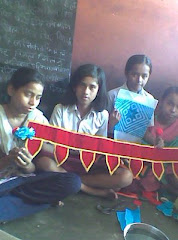
Sixty bright-eyed girls are doing their first year BA in Political Science. It is the first undergraduate course thrown open for girls. Most of them are first-generation women to receive higher education. Were it not for the bus that the institute runs, which brings them to their college on the JVBI campus and takes them back, many of them would have been unable to attend. The new vice-chancellor of the university knows that and when she threw open the institute’s gates, acquiring a bus was a priority.

The girls revel in the joy higher education brings. When asked what was the first word that came to their mind when they were given the term ‘‘college”, unhesitatingly one of them replied: ‘‘mauj-masti’’. It is like being let out of a prison. And as the girls make friends, explore the university, attend classes, discover the library, try out the latest fashions, the parents look around for grooms. But will these girls marry the first suitable boy?

Unlikely. All of them want to work, to be economically independent. And most of them know what they want to do — law, journalism, teaching, business management and even flying! They are finding out how to get there.

How would a traditional society react to these girls? Would it force them to conform — put them behind the ghunghat or the burkha — or would the force of their collective spirit crumble the small-town middle class bastions and set them free? The tide is strong, and there is no holding back. They want to have control over their lives. Who would know this better than the boys on the campus? Among them is a palpable apprehension of the changing equations. She is different from the women they have known so far. Would they be able to handle this creature who wants to be an equal, have a career and an opinion? Would she respect her in-laws and be god-fearing, cook and wait for them like they have seen the women do? Would they have to share the household chores? And would entering the kitchen be a reflection on manhood? ‘‘Manhood’’ here is waiting for a new definition.

In nearby Koel village, people have turned out in full strength and in their best — from the old bent man to the baby wide-eyed on her mother’s shoulder. The village has no health centre and only a primary school. Its fragile economy couldn’t be worse. But they are celebrating the opening of a bridge school for those girls who have passed out of primary school but could not continue their education because there was nowhere to go.

The villagers have contributed in cash and the labour to build the five-room school. The university helped in devising a curriculum, identifying the teachers and a women’s organisation in a neighbouring town donated a handsome amount that will go towards paying the teachers and buying basic equipment. Thirty enthusiastic girls cannot wait to begin.

The coordinator of this unique project has been covering the distance from Udaipur to check out her new assignment before she moves into the campus. She crosses the desert by bus, train, anything that moves. She is excited — and in the few meetings she has had with her to-be students she has already taught them a song and helped them prepare a skit for the inauguration.

In Sujangarh, a neighbouring town, waits a real surprise. Savita Rathi, a lawyer by training, a mother and a medical superintendent by choice. She switches among her roles with absolute ease and carries herself with supreme confidence. “Yes, it has been tough,” she admits. “Women have to struggle very hard to succeed especially in small towns like these.”

But that is the last thing that bothers these women. They want more from life and are prepared to travel, live alone, study and slog for it. They yearn for a life beyond home.
Visit blogadda.com to discover Indian blogs
My Blog Directory